Yacinţa: Difference between revisions
No edit summary |
m Text replacement - "Khargaath Mountains" to "Ilergierze Mountains" |
||
| (27 intermediate revisions by the same user not shown) | |||
| Line 1: | Line 1: | ||
{{ | {{Settlements in the Sanctuary Vale Infobox | ||
|Name= | |Name=Yacinţa | ||
|Image=[[File: | |Image=[[File:Yacinţa.jpg|center|frameless]] | ||
|Type=Scholarly City | |Type=Scholarly City | ||
|Location=Eastern slopes of the [[ | |Location=Eastern slopes of the [[Ilergierze Mountains]], western Sanctuary Vale | ||
|Realm=[[ | |Realm=[[Khamria]] | ||
|Inhabitants= | |Region=Sanctuary Vale | ||
|Significance=Primary academic center of | |Subregion=Ilergierze Mountains | ||
|Controlled by=Council of | |Inhabitants=[[Arânzeni]] | ||
|Significance=Primary academic center of Arânzeni culture; site of layered archives | |||
|Controlled by=Council of [[Lavierin]] | |||
}} | }} | ||
{{ | {{Settlements in the Sanctuary Vale Sections | ||
|Introduction= | |Introduction=Yacinţa is a highland city located on the eastern face of the Ilergierze Mountains, where stone cliffs descend into the western reaches of [[Sanctuary Vale]]. Sheltered by the impassable peaks of the Khargaath, Yacinţa is the foremost center for Arânzeni scholarship and the home of the [[Varunel]]. It is accessible via the Dul-Mar Deep Road and the overland Va-Djes Road. | ||
|Geography=The city is carved into wide terraces along a natural rock face, with layered stone buildings rising in stepped arcs from the valley floor. The upper structures cling to ledges, while lower plazas catch early light and remain cooler | |||
|History= | Due to the powerful influence of Varunel, local Arânzeni are renowned for their exceptional recollection and precise historical retention. | ||
|Districts=* The Archives – Tiered vaults and record houses that preserve historical | |Etymology=From the Arânzeni phrase ''Hili'' (city) ''Yacinţige'' (place of knowledge), which means city of the place of knowledge. | ||
* | |Geography=The city is carved into wide terraces along a natural rock face, with layered stone buildings rising in stepped arcs from the valley floor. The upper structures cling to ledges, while lower plazas catch early light and remain cooler. | ||
* [[ | |History=Settled by Varunel, during the [[Age of Ascendance|Age of Ascendance,]] originally a refuge for scribes and record keepers, Yacinţa expanded into a full civic center after it was formalized by the [[Council of Lavierin]] and charged with safeguarding Arânzeni history. Over time, guilds of scholars, translators, and historians established a permanent community centered on recordkeeping, research, and long-term study. | ||
* Outer Ledges – Open platforms used for observation | |Districts=* The Archives – Tiered vaults and record houses that preserve historical ledgers, legal texts, and personal documents. | ||
* Scholar’s Way – A wide corridor lined with study halls, small observatories, and research quarters. | |||
* [[Oinien]] Quarter – A partially subterranean complex for visiting Oinien scholars and residents. | |||
* Outer Ledges – Open platforms used for reflection and observation. | |||
|Culture and Society= | |Culture and Society=Yacinţa is slow-paced, contemplative, and oriented toward the accumulation and safeguarding of knowledge. | ||
|Spiritual Significance= | |Spiritual Significance=Yacinţa is considered a holy site due to its association with Varunel. Many residents regard their scholarly work as a form of devotion, preserving truth through precision. | ||
|Economy= | |||
|Defense and Military= | The [[Ancestral Spirit]], [[Nal-Kot]], is an ever-watchful eye over the city and mountain pass. Nal-Kot was born over centuries of belief that the mountains themselves protected the city. | ||
|Economy=Supplies are delivered from [[Luropiră]], [[Va-Tar]], and caravans from [[Lepigisţil]]. In return, Yacinţa provides transcription, consultation, and access to its archives by appointment. | |||
|Defense and Military=Yacinţa is defended by a [[stonewarden]] garrison. The terrain naturally limits access, and signal routes connect the city to [[Fort Garbe]] and other nearby outposts. | |||
The Ancestral Spirit, Nal-Kot, known as the Guardian of Yacinţa, has long protected the city. Emerging from the mountains themselves in times of crisis. | |||
}} | }} | ||
[[ | [[Category:Council of Lavierin Holdings]][[category:Ilergierze Mountains]] | ||
[[category: | |||
Latest revision as of 21:05, 30 July 2026
| Yacinţa | |
|---|---|
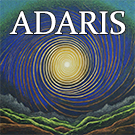
| Image |  |
| Type | Scholarly City |
| Location | Eastern slopes of the Ilergierze Mountains, western Sanctuary Vale |
| Realm | Khamria |
| Region | Sanctuary Vale |
| Subregion | Ilergierze Mountains |
| Inhabitants | Arânzeni |
| Significance | Primary academic center of Arânzeni culture; site of layered archives |
| Controlled by | Council of Lavierin |
Introduction
Yacinţa is a highland city located on the eastern face of the Ilergierze Mountains, where stone cliffs descend into the western reaches of Sanctuary Vale. Sheltered by the impassable peaks of the Khargaath, Yacinţa is the foremost center for Arânzeni scholarship and the home of the Varunel. It is accessible via the Dul-Mar Deep Road and the overland Va-Djes Road.
Due to the powerful influence of Varunel, local Arânzeni are renowned for their exceptional recollection and precise historical retention.
Etymology
From the Arânzeni phrase Hili (city) Yacinţige (place of knowledge), which means city of the place of knowledge.
Geography
The city is carved into wide terraces along a natural rock face, with layered stone buildings rising in stepped arcs from the valley floor. The upper structures cling to ledges, while lower plazas catch early light and remain cooler.
History
Settled by Varunel, during the Age of Ascendance, originally a refuge for scribes and record keepers, Yacinţa expanded into a full civic center after it was formalized by the Council of Lavierin and charged with safeguarding Arânzeni history. Over time, guilds of scholars, translators, and historians established a permanent community centered on recordkeeping, research, and long-term study.
Districts
- The Archives – Tiered vaults and record houses that preserve historical ledgers, legal texts, and personal documents.
- Scholar’s Way – A wide corridor lined with study halls, small observatories, and research quarters.
- Oinien Quarter – A partially subterranean complex for visiting Oinien scholars and residents.
- Outer Ledges – Open platforms used for reflection and observation.
Culture and Society
Yacinţa is slow-paced, contemplative, and oriented toward the accumulation and safeguarding of knowledge.
Spiritual Significance
Yacinţa is considered a holy site due to its association with Varunel. Many residents regard their scholarly work as a form of devotion, preserving truth through precision.
The Ancestral Spirit, Nal-Kot, is an ever-watchful eye over the city and mountain pass. Nal-Kot was born over centuries of belief that the mountains themselves protected the city.
Economy
Supplies are delivered from Luropiră, Va-Tar, and caravans from Lepigisţil. In return, Yacinţa provides transcription, consultation, and access to its archives by appointment.
Defense and Military
Yacinţa is defended by a stonewarden garrison. The terrain naturally limits access, and signal routes connect the city to Fort Garbe and other nearby outposts.
The Ancestral Spirit, Nal-Kot, known as the Guardian of Yacinţa, has long protected the city. Emerging from the mountains themselves in times of crisis.