Delmora: Difference between revisions
No edit summary |
No edit summary |
||
| Line 6: | Line 6: | ||
}} | }} | ||
{{Realms of Orethil Sections | {{Realms of Orethil Sections | ||
|Introduction='''Delmora''' is a realm defined by its rivers, where flowing water carves through fertile plains | |Introduction='''Delmora''' is a realm defined by its rivers, where flowing water carves through fertile plains. It is a land shaped by renewal, in which seasonal floods restore the soil, and the rhythms of water dictate patterns of trade, agriculture, and settlement. | ||
|History=The history of Delmora is inseparable from its rivers. Early civilizations emerged along their banks, where fertile floodplains enabled agriculture and sustained the first permanent settlements. Over time, rivers became trade routes, linking communities across the realm and facilitating the exchange of goods, knowledge, and traditions. | |||
The Ruvin were among the earliest engineers of Delmora, transforming the waterways into structured networks of canals, levees, and irrigation systems. In contrast, the [[Odrak]] developed a more reserved and enduring culture along the Great Lake, building stone cities that withstood both flood and time. | |||
The Ruvin were among the earliest engineers of Delmora, transforming the waterways into structured networks of canals, levees, and irrigation systems. In contrast, the [[ | |||
Archaeological evidence and submerged ruins suggest the existence of older, possibly pre-Ruvin cultures now lost beneath the lake and river deltas. Whether these civilizations were destroyed by floods or gradually absorbed into later societies remains the subject of both scholarship and myth. | Archaeological evidence and submerged ruins suggest the existence of older, possibly pre-Ruvin cultures now lost beneath the lake and river deltas. Whether these civilizations were destroyed by floods or gradually absorbed into later societies remains the subject of both scholarship and myth. | ||
| Line 18: | Line 16: | ||
==== Major Geographic Features ==== | ==== Major Geographic Features ==== | ||
*The Twin Rivers – Two major rivers, one descending from the [[ | *The Twin Rivers – Two major rivers, one descending from the [[[Niseth]] Range]] in the west and the other from the Northern [[White Mountains]], intersect near the heart of Delmora. Their confluence is a hub of agriculture, trade, and governance, and is home to the Ruvin capital of Kelmarin. | ||
*The | *The Great Lake – A vast inland freshwater body, bordered by Odrak settlements. Its fog-covered surface conceals submerged cities and spiritual monuments. The lake serves as a cultural and spiritual counterbalance to the rivers, emphasizing stillness and depth over motion. | ||
|Climate=Delmora experiences a temperate and river-driven climate, shaped less by temperature fluctuations and more by seasonal changes in water flow. Its weather patterns are closely tied to the rhythms of the rivers and the influence of the Great Lake, resulting in a cycle of flood, drought, and mist that defines life across the realm. | |Climate=Delmora experiences a temperate and river-driven climate, shaped less by temperature fluctuations and more by seasonal changes in water flow. Its weather patterns are closely tied to the rhythms of the rivers and the influence of the Great Lake, resulting in a cycle of flood, drought, and mist that defines life across the realm. | ||
|Flora and Fauna=Delmora’s fertile plains, floodplains, and inland lake support a diverse and adaptive ecosystem. Life here is shaped by the movement of water—plants must endure submersion or drought, and animals follow migratory paths guided by seasonal flow. | |Flora and Fauna=Delmora’s fertile plains, floodplains, and inland lake support a diverse and adaptive ecosystem. Life here is shaped by the movement of water—plants must endure submersion or drought, and animals follow migratory paths guided by seasonal flow. | ||
|Native Spirits=The spirits of Delmora are closely tied to the flow of water and the cycles of flood, growth, erosion, and memory. Many are believed to dwell in rivers, springs, rainstorms, or the hidden depths of the Great Lake. They are invoked by both Ruvin and [[Ulshari]] communities for guidance, protection, and renewal. | |||
|Native Spirits=The spirits of Delmora are closely tied to the flow of water and the cycles of flood, growth, erosion, and memory. Many are believed to dwell in rivers, springs, rainstorms, or the hidden depths of the Great Lake. They are invoked by both Ruvin and Ulshari communities for guidance, protection, and renewal. | |||
=== Nascent Spirits === | === Nascent Spirits === | ||
Revision as of 20:32, 27 December 2025
| Delmora | |
|---|---|
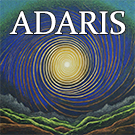
| Image |  |
| Country(ies) | |
| Native Races | Ruvin • Odrak |
Introduction
Delmora is a realm defined by its rivers, where flowing water carves through fertile plains. It is a land shaped by renewal, in which seasonal floods restore the soil, and the rhythms of water dictate patterns of trade, agriculture, and settlement.
History
The history of Delmora is inseparable from its rivers. Early civilizations emerged along their banks, where fertile floodplains enabled agriculture and sustained the first permanent settlements. Over time, rivers became trade routes, linking communities across the realm and facilitating the exchange of goods, knowledge, and traditions.
The Ruvin were among the earliest engineers of Delmora, transforming the waterways into structured networks of canals, levees, and irrigation systems. In contrast, the Odrak developed a more reserved and enduring culture along the Great Lake, building stone cities that withstood both flood and time.
Archaeological evidence and submerged ruins suggest the existence of older, possibly pre-Ruvin cultures now lost beneath the lake and river deltas. Whether these civilizations were destroyed by floods or gradually absorbed into later societies remains the subject of both scholarship and myth.
Geography
Delmora is a land defined by water, where rivers and lakes shape not only the terrain but the lives of its inhabitants. The region’s most prominent geographic feature is its twin river systems, which converge near the realm’s center before flowing eastward into the Great Lake. These waterways form the foundation of Delmora’s economy, ecology, and settlement patterns.
Major Geographic Features
- The Twin Rivers – Two major rivers, one descending from the [[[Niseth]] Range]] in the west and the other from the Northern White Mountains, intersect near the heart of Delmora. Their confluence is a hub of agriculture, trade, and governance, and is home to the Ruvin capital of Kelmarin.
- The Great Lake – A vast inland freshwater body, bordered by Odrak settlements. Its fog-covered surface conceals submerged cities and spiritual monuments. The lake serves as a cultural and spiritual counterbalance to the rivers, emphasizing stillness and depth over motion.
Native Spirits
The spirits of Delmora are closely tied to the flow of water and the cycles of flood, growth, erosion, and memory. Many are believed to dwell in rivers, springs, rainstorms, or the hidden depths of the Great Lake. They are invoked by both Ruvin and Ulshari communities for guidance, protection, and renewal.
Nascent Spirits
- Driftlings – Minor river spirits found in streams and tributaries. Often seen as playful or mischievous, they are said to guide children and lost travelers along safe paths.
- Mistwhirls – Faint spirits of morning fog, particularly near the lake. They are believed to echo lost thoughts or warnings, and are treated with quiet respect by Ulshari shamans.
Mature Spirits
- The Rivermind – A collective spirit formed from the convergence of many streams into one river. It is invoked during rites of irrigation, healing, or remembrance.
- Taarith the Leveler – A spirit of erosion and balance, revered by the Ruvin as both a bringer of floods and a corrector of excess. Offerings are made to Taarith before major construction or during river redirection.
Ancestral Spirits
- Naithis – The ancestral Spirit of Renewal, regarded by both Ruvin and Ulshari as the soul of Delmora. Naithis is not worshipped as a distant deity but engaged with through ceremony, craft, and observation of the water’s will.
- The Drowned Oracle – A legendary spirit said to dwell in the trenches beneath the Great Lake. Believed to have once been a prophet who chose to sink into silence, the Oracle is consulted by Ulshari Depthkeepers for visions during times of crisis.