Tópil
| Tópil | |
|---|---|
| Image |  A drawing of Tópil |
| Region(s) | Elursāde |
| Aspect | Winter |
| Sacred Seat | House of Tópil |
Introduction
Tópil is the Ascendant Spirit of winter in Adaris, the embodiment of the winter season and of its abstract concept. She is a self-aware spirit who personifies both the physical and the temporal sides of the season. She is active throughout all regions of Dalel, but her home is in the frozen region of Elursāde. As an Ascendant Spirit she holds a major place in the spiritual hierarchy, though her harsh nature limits her popularity among ordinary worshipers.
Etymology
Tópil is a later form of Tápol • the Tivayi word for the cold season.
Nature and Influence

Tópil is the personification of the season itself: her influence governs the arrival, duration and departure of winter, and she commands the climatic forces that define the winter period. The strength of her season depends on geography. Winter is harshest in the cold outer regions of Dalel and mildest toward its warm center.
Because her nature is tied to an inevitably harsh time of year, her influence is often viewed with trepidation. She is acknowledged more out of necessity and fear than adoration.
Relationship with Other Spirits
The spiritual hierarchy of winter operates under Tópil's Ascendant influence and takes various forms across Adaris.

Hierarchy of Winter Spirits
Nascent Spirits of winter appear as brief, local phenomena, such as small cold patches or passing flurries. Mature Spirits embody prolonged events, such as a whole season's winter in one place or a severe local blizzard. Ancestral Spirits are rare in Tópil's tradition and represent specific, recurring weather, such as Arnevach, the Northern Blizzard, which strikes at the same time and place every year.
Relationships with the Other Seasons
Tópil is one of the four seasonal Ascendant Spirits, with Kútir (fall), Dúttávan (spring) and Hanver (summer). Their relationship is discussed under Philosophical interpretations.
Realm and Sacred Seat

Tópil makes her permanent home in Elursāde, a region suited to her nature. Because she is a seasonal spirit tied to the yearly cycle, she is often found wandering and manifesting across the regions of Dalel as the year progresses.
Osia
Disciples of the Path of Tópil seek to harness her seasonal authority. They study the timing of winter's arrival and departure, which lets them alter seasonal transitions. Skilled disciples can create local pockets of winter weather out of season and manipulate severe winter phenomena such as cold spells, blizzards and snowstorms.
Significance and Worship
Tópil is not widely worshiped. She is venerated by specialized weather cults that seek to control winter conditions for agricultural or strategic ends.
Among the general population, worship is mostly preventive pacification. Some regions hold winter festivals marking both her arrival and her departure. These celebrate her return while offering pleas and tributes in the hope that her season will be less harsh and destructive than it might otherwise be.
Philosophical Interpretations
Tópil is a subject of close study among philosophers, who consider her together with the other three seasonal Ascendant Spirits: Kútir, Dúttávan and Hanver.
The Seasonal Conflict Debate
Scholars study the relationships between these four spirits to explain how the seasons arrive, transition and replace one another. Because classical theory holds that the seasonal spirits cannot interact directly, they are almost never depicted together in art or text. This has given rise to two main schools of thought:
- The Harmony School argues that the seasonal spirits act in a pre-established harmony, passing custody of the world's climate to one another to maintain natural balance.
- The Conflict School holds that the seasons exist in perpetual, cyclical conflict, in which each Ascendant Spirit must forcibly usurp the previous one to establish its dominion.
Symbolism and Iconography
In art and religious iconography, Tópil is traditionally depicted as a young woman. A defining feature of her image is her left hand, almost always shown in a thick, padded winter mitten.
Statues of Tópil are plain and minimalist. She is usually shown in sheer robes that offer no protection against the elements, emphasizing that she is impervious to the cold and to the other effects of winter.
Gallery
-
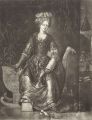 An etching of Tópil, note the gloved hand, a common motif.
 -
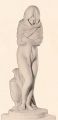 A statue of Tópil
 -
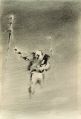 A disciple of the Path of Tópil conjures a snowstorm.
 -
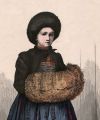 A female disciple of Tópil
 -
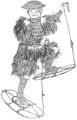 A male disciple of Tópil


