
Balúrail: Difference between revisions
Units: imperial first, metric in parentheses |
Full review: etymology, geographic history, borders, climate, government, economy, demographics, culture, Dañi |
||
| Line 1: | Line 1: | ||
{{Regions of Dalel Infobox | {{Regions of Dalel Infobox | ||
|Realms of Dalel Name=Balúrail | |||
|Image=[[File:Balúrail Belargae Swamp 02.jpg|center|frameless]] | |Image=[[File:Balúrail Belargae Swamp 02.jpg|center|frameless]] | ||
{{center|[[Belargae Swamp]] in Balúrail}} | {{center|[[Belargae Swamp]] in Balúrail}} | ||
| Line 9: | Line 10: | ||
|Regions=[[Eastern Highlands]], [[Western Lowlands]] | |Regions=[[Eastern Highlands]], [[Western Lowlands]] | ||
|Size=94,428 mi² (244,567 km²) | |Size=94,428 mi² (244,567 km²) | ||
|Spirits=Mavai, Tahami, Sitaivu | |Spirits=Mavai, Tahami, Sitaivu, Dañi | ||
|Inhabitants=Tuzquão, Mifajene | |Inhabitants=Tuzquão, Mifajene | ||
|Population=1.6 | |Population=1.6 million | ||
}} | }} | ||
{{Regions of Dalel Sections | {{Regions of Dalel Sections | ||
|Introduction='''Balúrail''' is a region of swamps and | |Introduction='''Balúrail''' is a region of swamps, bogs and forested foothills at the southwestern end of the continent of [[Méniail]] in [[Dalel]], and the coldest region of the continent. It is divided into the [[Western Lowlands]] and the [[Eastern Highlands]]. Its native people are the [[Mifajene]]; most of its inhabitants today are [[Tuzquão]], whose state, the [[League of Balúrail]], governs the whole region. Its [[Ascendant Spirit|Ascendant Spirits]] include [[Tahami]], the spirit of bogs and swamps, and [[Mavai]], the spirit of mystery and uncertainty. | ||
|History==== | |Etymology=''Balúrail'' is the [[Tuzquês]] form of the [[Gostaldi (Language)|Gostaldi]] name ''Badhol lúraild'', "land of the marshes", given by the first settlers from the [[Kingdom of Bóinbile]]. | ||
|History= | |||
=== Formation === | |||
During the [[Great Erosion]], [[Aahi]] forced her way into Dalel, and the low ground of Balúrail was flooded. [[Yairan]] hardened the earth to halt the erosion, leaving the water no path to escape, and the lowlands became a vast mudflat that in time divided into the swamps, bogs and lakes of the Western Lowlands. To the east the land rises into the foothills of the [[Mazissage Mountains]], which form the Eastern Highlands. | |||
=== | === Tahami and the Mifajene === | ||
When the swamps formed, Tahami formed with them, arising from the water trapped within the hardened earth. He made his home in the northwest of the lowlands and created the Mifajene, an otter-like people who lived throughout the lowlands in small tribal villages for thousands of years. | |||
Humans arrived by sea from the | === Human settlement === | ||
|Geography==== Regions === | {{main|League of Balúrail}} | ||
Humans arrived by sea from the Kingdom of Bóinbile in [[Gosterra]] in 201 ME and founded [[Saindo]]. Their settlements were colonial towns of the Kingdom until 289 ME, when they became independent as the League of Balúrail. The settlers, who became known as the Tuzquão, spread across the drier ground and the coast of the lowlands. Between about 290 and 340 ME they conquered most of the lowlands and displaced the Mifajene, and in 342 ME the [[Mifajene Reservation]] was established in the northwest. In recent years Tahami has grown hostile to Tuzquão expansion, and the wetlands have begun to encroach on settled land. | |||
|Geography=Balúrail lies at the southwestern end of Méniail. It borders Gosterra to the north and [[Khamria]] to the east, and is separated from both by the Mazissage Mountains, which run to the sea. It covers 94,428 mi² (244,567 km²). | |||
=== Regions === | |||
The '''Western Lowlands''', 54,174 mi² (140,310 km²), cover the west of the region, from the coast to the [[Diate River]]. They are largely peat bog, broken by patches of dry ground, lakes and light forest, and hold the great swamps of Balúrail, among them the [[Ganze Swamp]], the largest. Most of the rivers of Balúrail rise in the highlands and flow west across them to the sea. | |||
The '''Eastern Highlands''', 40,254 mi² (104,257 km²), are the rocky foothills of the Mazissage Mountains and large expanses of boreal forest, including the [[Doye Forest]]. They are bounded in the south by the [[Sirilquito Hills]]. [[Lake Arrerem]] lies at their southern edge. | |||
=== Climate === | === Climate === | ||
[[File:Balúrail Winter Ganze Swamp 01.jpg|thumb|Winter in the [[Ganze Swamp]]]] | [[File:Balúrail Winter Ganze Swamp 01.jpg|thumb|Winter in the [[Ganze Swamp]]]] | ||
Balúrail | Balúrail is the coldest region of Méniail. The Western Lowlands have long, cold winters with extended freezing periods and short, warm summers, and mist is frequent; [[Ezinco]] is the wettest part. The Eastern Highlands are slightly milder, but their elevation largely offsets the difference, and the foothills grow colder toward the mountains. | ||
=== Flora and Fauna === | === Flora and Fauna === | ||
{{ | {{main|Flora and Fauna of Balúrail}} | ||
[[ | The plants and animals of Balúrail are adapted to cold winters and waterlogged ground. Most of the swamps are made of peat. The [[Balúrail Irerde]] is the most common tree of the lowlands, and boreal forest covers much of the highlands. Among the native animals is the [[Aerbicar]], a large one-horned herbivore whose wide hooves carry it across marshy peat. | ||
[[ | |Goverment and Politics=Balúrail is governed by the League of Balúrail. The League consists of the federal [[District of Têr]], which holds the capital; four states, [[Gostiria]], [[Ivaiê]], [[Ezinco]] and [[Gurverde]]; the territory of [[Eimbuver]]; and the semi-sovereign Mifajene Reservation. | ||
|Economy=Balúrail's economy rests on its natural resources. Peat is cut from the swamps, and medicinal herbs are gathered there. The Balúrail Irerde is the main source of lumber, iron is mined in the Sirilquito Hills, and gold has been mined in Gurverde since its discovery in 771 ME. Shipbuilding and sea trade are major industries, centered on the ports of Gostiria, Ivaiê and Ezinco. | |||
|Demographics=Balúrail has about 1.6 million inhabitants, about 1.4 million of them in the Western Lowlands. Most are Tuzquão, and about half live in towns and cities, most of them on the coast or on dry ground. The largest city is Têr, with about 300,000 people. Smaller communities from other regions live in the port cities. | |||
The Mifajene number about 67,000: about 60,000 on the Mifajene Reservation and about 7,000 free Mifajene in the Eimbuver. | |||
|Culture={{main|Culture of the League of Balúrail}} | |||
Tuzquão culture is shaped by Balúrail's swamps and long winters. Its language is [[Tuzquês]], and its towns are built on dry ground and along the coast. Peat cutting is a common trade. Mavai has been the main spiritual influence on the Tuzquão since their arrival. | |||
The Mifajene live in small tribal villages without a central government and remain close to Tahami, who created them. Mifajene cave art survives in the eastern foothills. | |||
|Native Spirits=[[Mavai]] is the Ascendant Spirit of mystery and uncertainty. Her home, the [[House of Mavai]], is in the state of Ivaiê. | |||
[[Tahami]] is the Ascendant Spirit of swamps and bogs. His home, the [[House of Tahami]], is on the Mifajene Reservation in northwestern Balúrail. | |||
[[ | [[Sitaivu]] is the Ascendant Spirit of rot and decay. Its home, the [[House of Sitaivu]], is on the northern edge of the [[Egoaldigo Swamp]] in Gostiria. | ||
[[ | [[Dañi]] is the Ascendant Spirit of mist and fog. Her home, the [[House of Dañi]], is in the Mazissage Mountains, on the border between Balúrail and Khamria. | ||
|Gallery={{Slideshow| | |Gallery={{Slideshow| | ||
Tuzquão_Peat_Cutter_Photo 01.jpg:: A common profession in Balúrail is that of the peat cutter. | Tuzquão_Peat_Cutter_Photo 01.jpg:: A common profession in Balúrail is that of the peat cutter. | ||
| Line 52: | Line 62: | ||
Gorísio Estilgive Photo 01.jpg :: A photograph of Gorísio Estilgive, president of the [[League of Balúrail]]. | Gorísio Estilgive Photo 01.jpg :: A photograph of Gorísio Estilgive, president of the [[League of Balúrail]]. | ||
}} | }} | ||
|See Also=* [[League of Balúrail]] | |||
* [[Tuzquão]] | |||
* [[Mifajene]] | |||
* [[Western Lowlands]] | |||
* [[Eastern Highlands]] | |||
* [[Flora and Fauna of Balúrail]] | |||
}} | }} | ||
Revision as of 19:35, 10 October 2026
| Balúrail | |
|---|---|
| Image |  Belargae Swamp in Balúrail |
| Location |  Location of Balúrail on the continent of Méniail |
| Continent | Méniail |
| Country(ies) | League of Balúrail |
| Largest City | Têr |
| Subregions | Eastern Highlands • Western Lowlands |
| Size | 94,428 mi² (244,567 km²) |
| Spirits | Mavai • Tahami • Sitaivu • Dañi |
| Native Races | Tuzquão • Mifajene |
| Population | 1.6 million |
Introduction
Balúrail is a region of swamps, bogs and forested foothills at the southwestern end of the continent of Méniail in Dalel, and the coldest region of the continent. It is divided into the Western Lowlands and the Eastern Highlands. Its native people are the Mifajene; most of its inhabitants today are Tuzquão, whose state, the League of Balúrail, governs the whole region. Its Ascendant Spirits include Tahami, the spirit of bogs and swamps, and Mavai, the spirit of mystery and uncertainty.
Etymology
Balúrail is the Tuzquês form of the Gostaldi name Badhol lúraild, "land of the marshes", given by the first settlers from the Kingdom of Bóinbile.
History
Formation
During the Great Erosion, Aahi forced her way into Dalel, and the low ground of Balúrail was flooded. Yairan hardened the earth to halt the erosion, leaving the water no path to escape, and the lowlands became a vast mudflat that in time divided into the swamps, bogs and lakes of the Western Lowlands. To the east the land rises into the foothills of the Mazissage Mountains, which form the Eastern Highlands.
Tahami and the Mifajene
When the swamps formed, Tahami formed with them, arising from the water trapped within the hardened earth. He made his home in the northwest of the lowlands and created the Mifajene, an otter-like people who lived throughout the lowlands in small tribal villages for thousands of years.
Human settlement
Humans arrived by sea from the Kingdom of Bóinbile in Gosterra in 201 ME and founded Saindo. Their settlements were colonial towns of the Kingdom until 289 ME, when they became independent as the League of Balúrail. The settlers, who became known as the Tuzquão, spread across the drier ground and the coast of the lowlands. Between about 290 and 340 ME they conquered most of the lowlands and displaced the Mifajene, and in 342 ME the Mifajene Reservation was established in the northwest. In recent years Tahami has grown hostile to Tuzquão expansion, and the wetlands have begun to encroach on settled land.
Geography
Balúrail lies at the southwestern end of Méniail. It borders Gosterra to the north and Khamria to the east, and is separated from both by the Mazissage Mountains, which run to the sea. It covers 94,428 mi² (244,567 km²).
Regions
The Western Lowlands, 54,174 mi² (140,310 km²), cover the west of the region, from the coast to the Diate River. They are largely peat bog, broken by patches of dry ground, lakes and light forest, and hold the great swamps of Balúrail, among them the Ganze Swamp, the largest. Most of the rivers of Balúrail rise in the highlands and flow west across them to the sea.
The Eastern Highlands, 40,254 mi² (104,257 km²), are the rocky foothills of the Mazissage Mountains and large expanses of boreal forest, including the Doye Forest. They are bounded in the south by the Sirilquito Hills. Lake Arrerem lies at their southern edge.
Climate

Balúrail is the coldest region of Méniail. The Western Lowlands have long, cold winters with extended freezing periods and short, warm summers, and mist is frequent; Ezinco is the wettest part. The Eastern Highlands are slightly milder, but their elevation largely offsets the difference, and the foothills grow colder toward the mountains.
Flora and Fauna
The plants and animals of Balúrail are adapted to cold winters and waterlogged ground. Most of the swamps are made of peat. The Balúrail Irerde is the most common tree of the lowlands, and boreal forest covers much of the highlands. Among the native animals is the Aerbicar, a large one-horned herbivore whose wide hooves carry it across marshy peat.
Goverment and Politics
Balúrail is governed by the League of Balúrail. The League consists of the federal District of Têr, which holds the capital; four states, Gostiria, Ivaiê, Ezinco and Gurverde; the territory of Eimbuver; and the semi-sovereign Mifajene Reservation.
Economy
Balúrail's economy rests on its natural resources. Peat is cut from the swamps, and medicinal herbs are gathered there. The Balúrail Irerde is the main source of lumber, iron is mined in the Sirilquito Hills, and gold has been mined in Gurverde since its discovery in 771 ME. Shipbuilding and sea trade are major industries, centered on the ports of Gostiria, Ivaiê and Ezinco.
Demographics
Balúrail has about 1.6 million inhabitants, about 1.4 million of them in the Western Lowlands. Most are Tuzquão, and about half live in towns and cities, most of them on the coast or on dry ground. The largest city is Têr, with about 300,000 people. Smaller communities from other regions live in the port cities.
The Mifajene number about 67,000: about 60,000 on the Mifajene Reservation and about 7,000 free Mifajene in the Eimbuver.
Culture
Tuzquão culture is shaped by Balúrail's swamps and long winters. Its language is Tuzquês, and its towns are built on dry ground and along the coast. Peat cutting is a common trade. Mavai has been the main spiritual influence on the Tuzquão since their arrival.
The Mifajene live in small tribal villages without a central government and remain close to Tahami, who created them. Mifajene cave art survives in the eastern foothills.
Native Spirits
Mavai is the Ascendant Spirit of mystery and uncertainty. Her home, the House of Mavai, is in the state of Ivaiê.
Tahami is the Ascendant Spirit of swamps and bogs. His home, the House of Tahami, is on the Mifajene Reservation in northwestern Balúrail.
Sitaivu is the Ascendant Spirit of rot and decay. Its home, the House of Sitaivu, is on the northern edge of the Egoaldigo Swamp in Gostiria.
Dañi is the Ascendant Spirit of mist and fog. Her home, the House of Dañi, is in the Mazissage Mountains, on the border between Balúrail and Khamria.
Gallery
-
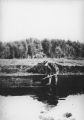 A common profession in Balúrail is that of the peat cutter.
 -
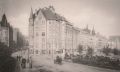 A photograph of Ivaiê ca. 884
 -
 A photograph of Gorísio Estilgive, president of the League of Balúrail.


See also