Jirna: Difference between revisions
No edit summary |
m Text replacement - "Great Southern Swamp" to "Soltani Swamp" |
||
| (One intermediate revision by the same user not shown) | |||
| Line 17: | Line 17: | ||
Within the hierarchy of Jirna, [[Ancestral Spirit|Ancestral spirits]] are exceedingly rare, emerging only when collective environmental memory crystallizes over generations. These ancestral forces manifest as massive, enduring phenomena, such as an entire forest experiencing a multi-decade decline or a catastrophic, systemic blight that ravages a region for centuries. | Within the hierarchy of Jirna, [[Ancestral Spirit|Ancestral spirits]] are exceedingly rare, emerging only when collective environmental memory crystallizes over generations. These ancestral forces manifest as massive, enduring phenomena, such as an entire forest experiencing a multi-decade decline or a catastrophic, systemic blight that ravages a region for centuries. | ||
|Realm=Jirna resides within the [[House of | |Realm=Jirna resides within the [[House of Jirna]]. | ||
=== Geography === | === Geography === | ||
The House of | The House of Jirna is situated on the northern periphery of the [[Soltani Swamp]], located within the region of [[Falanga]] in [[Payalwa]]. Dense humidity, stagnant waters, and a constant cycle of organic death and renewal characterize the surrounding environment. | ||
=== Architecture and Domain === | === Architecture and Domain === | ||
[[File: | [[File:House_of_Jirna.jpg|thumb|The House of Jirna]] | ||
The seat of Jirna's power is a decaying, castle-like structure. This fortress is surrounded as far as the eye can see by massive [[termite mounds]]. Jirna commands these [[termites]], utilizing them as a specialized army to maintain the domain. | The seat of Jirna's power is a decaying, castle-like structure. This fortress is surrounded as far as the eye can see by massive [[termite mounds]]. Jirna commands these [[termites]], utilizing them as a specialized army to maintain the domain. | ||
Latest revision as of 01:42, 15 June 2026
| Jirna | |
|---|---|
| Image |  |
| Realm | Payalwa |
| Aspect | Rot and Decay |
| Sacred Seat | House of Jirna |
Introduction
Jirna is the Ascendant Spirit of Rot and Decay within the world of Adaris. Jirna is the literal embodiment of organic decomposition, putrefaction, and the breakdown of matter, holding a significant place within the spiritual hierarchy and the world's ecological balance. Like all entities in Adaris, Jirna's essence is ultimately derived from Daathir, the first consciousness.
Nature and Influence

Jirna's primary domain encompasses all facets of rot, decay, and organic degradation. This influence extends across a wide range of natural processes, including the decomposition of animal and plant matter and the proliferation of fungi, mold, and mildew. Furthermore, Jirna governs the fermentation of organic materials, the spoiling of food, the progression of infected, festering wounds, and the structural weakening of wood and other organic building materials. Jirna regulates both the acceleration and retardation of these processes.
Relationship with Other Spirits
Within the spiritual hierarchy of Adaris, Jirna holds supreme dominion over the lower tiers of consciousness that manifest within the spectrum of decomposition. Jirna acts as the focal authority for lesser, localized spirits of decay, which are categorized by the duration and scale of their existence.
Nascent spirits under Jirna's influence consist of highly temporary, individualized instances of decomposition, such as the rotting of a single piece of fruit, the breakdown of an individual fallen tree, or the short-term festering of a localized wound.
As these processes endure and stabilize, they transition into Mature spirits, which embody long-term degradation; they are typically manifested in decaying architecture, abandoned settlements, or ancient objects with prolonged structural breakdown.
Within the hierarchy of Jirna, Ancestral spirits are exceedingly rare, emerging only when collective environmental memory crystallizes over generations. These ancestral forces manifest as massive, enduring phenomena, such as an entire forest experiencing a multi-decade decline or a catastrophic, systemic blight that ravages a region for centuries.
Realm and Sacred Seat
Jirna resides within the House of Jirna.
Geography
The House of Jirna is situated on the northern periphery of the Soltani Swamp, located within the region of Falanga in Payalwa. Dense humidity, stagnant waters, and a constant cycle of organic death and renewal characterize the surrounding environment.
Architecture and Domain

The seat of Jirna's power is a decaying, castle-like structure. This fortress is surrounded as far as the eye can see by massive termite mounds. Jirna commands these termites, utilizing them as a specialized army to maintain the domain.
Physical Manifestation
When interacting with the physical world or manifesting within the realm, Jirna frequently assumes the form of a massive, human-sized termite queen. This form reflects the highly organized, collective consciousness of the insects that serve the spirit.
Osia

The followers and practitioners who align themselves with the Osia of Jirna gain the ability to manipulate the forces of decomposition. Through disciplined attunement to Jirna's consciousness'",'" these practitioners can influence organic breakdown in several distinct ways. Adepts can either hasten the rotting of matter or significantly slow it down, and they possess the ability to manipulate the growth of mold, mildew, various fungi, and the bacteria responsible for spoiling food. Perhaps the most practical and medicinal application of this Osia is its ability to halt the festering of wounds, allowing followers to slow or entirely stop infections and preserve life by freezing the process of decay. Additionally, adherents can target and weaken organic structures, such as wooden fortifications or tools, by inducing rapid rot.
Significance and Worship
Despite representing forces traditionally considered destructive, Jirna is actively invoked in mortal worship and religious rituals.

Rites of Preservation
Paradoxically, a primary component of Jirna's worship involves appeals to stop decay. Mortals frequently pray to Jirna to halt the decomposition of deceased bodies or to preserve wooden structures from rotting.
Theological Uncertainty
Because these requests directly contradict Jirna's fundamental nature as the embodiment of decay, scholars and theologians note that it remains entirely unclear how effective these appeals actually are. Some theologians suggest that pleasing Jirna merely diverts the spirit's attention away from the supplicant's property. In contrast, others believe that somebody must appease the spirit to withhold its naturally degrading influence.
Philosophical Interpretations
The central philosophical debate on Jirna is regarding the true scope of the spirit's conceptual nature.
The Duality Theory of Spirits
One prominent school of thought argues that Jirna is not merely the embodiment of decay, but also a spirit of regrowth. Proponents of this theory suggest that because decomposition is a strict prerequisite for new life and soil fertility, Jirna inherently governs the transitionary phase between death and regeneration.
Monistic Theories
In contrast to the Duality Theory stand various monistic theories of spirits (often referred to by scholars as monotheocentric or mono-conceptual frameworks). These arguments maintain that spirits are strictly bound to a single, unyielding concept. In this view, Jirna is purely the force of breakdown, and any subsequent regrowth is entirely the domain of separate, distinct elemental or ancestral spirits.
Symbolism and Iconography
The artistic representation and iconography of Jirna across Adaris are heavily tied to themes of mortality, insectoid hierarchy, and spoiled harvest. Depictions of Jirna in a massive, insectoid form as a termite queen represent the spirit's absolute dominion over its specialized army and its role as a consumer of weakened matter. Meanwhile, statues and paintings often portray Jirna as a decaying human figure in various stages of advanced decomposition, serving as a memento mori for mortal viewers. In agricultural communities, images of rotten and spoiled fruit serve as localized shorthand for Jirna's presence and influence over the harvest, and these icons are sometimes placed at the borders of fields to ward off unchecked blight.
Gallery
-
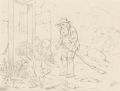 Jirna sometimes takes the human form of an old man with decaying clothing.
 -
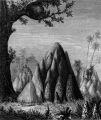 The area around the House of Jirna is composed of many termite mounds.
 -
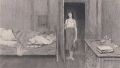 A female Jirna follower. Followers are often known for their ragged clothing.
 -
 A Male follower of Jirna. Followers are often known for their ragged clothing.
 -
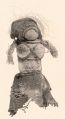 A ragged doll is sometimes used as a totem of sorts.


