Balúrail: Difference between revisions
m Text replacement - "Murazkar Range" to "Murazkar Mountains" Tags: Mobile edit Mobile web edit |
m Text replacement - "Boiyende" to "Tuzquão" |
||
| (35 intermediate revisions by the same user not shown) | |||
| Line 1: | Line 1: | ||
{{Realms of | {{Realms of Dalel Infobox | ||
|Realms of | |Realms of Dalel Name=Balúrail | ||
|Image=[[File: | |Image=[[File:Balúrail Belargae Swamp 02.jpg|center|frameless]] | ||
{{center| | {{center|[[Belargae Swamp]] in Balúrail}} | ||
|Location=[[File: | |Location=[[File:Balúrail Location Méniail Political Map.png|center|frameless|Balúrail Location Méniail Political Map]] | ||
{{center|Location of | {{center|Location of Balúrail on the continent of Méniail}} | ||
|Continent= | |Continent=Méniail | ||
|Countries=League of | |Countries=League of Balúrail | ||
|Largest City=[[ | |Largest City=[[Ivaié (city)|Ivaié]] | ||
|Regions=[[Eastern Highlands]], [[Western Lowlands]] | |Regions=[[Eastern Highlands]], [[Western Lowlands]] | ||
|Size=94,428 mi² | |Size=94,428 mi² | ||
|Spirits= | |Spirits=Mavai, Tahami, Sitaivu | ||
|Inhabitants= | |Inhabitants=Tuzquão, Mifajene | ||
|Population=1.6 Million | |Population=1.6 Million | ||
}} | }} | ||
{{Realms of | {{Realms of Dalel Sections | ||
|Introduction=''' | |Introduction='''Balúrail''' is the realm of swamps and bogs located on the southwestern side of the continent of [[Méniail]] in [[Dalel]]. It is the realm of the spirit [[Mavai]], the spirit of mystery and uncertainty, and [[Tahami]], the spirit of bogs and swamps. | ||
|History==== Early Inhabitants === | |History==== Early Inhabitants === | ||
Balúrail was originally inhabited by the race of [[Mifajene]], a small swamp-adapted otter-like creature who lived in small swampy villages scattered around the Balúrail lowlands. Mifajene society is decentralized and tribal in nature. | |||
=== Human Migration and the | === Human Migration and the Tuzquão === | ||
When humans migrated to the area, they eventually became known the [[ | When humans migrated to the area, they eventually became known as the [[Tuzquão]]. Over generations, the Mifajene were slowly displaced as the Tuzquão continued to spread out across the land. As the Tuzquão grew in strength, the oppression of the Mifajene continued, resulting in the creation of a large reservation in the north-west. | ||
|Geography==== Regions === | |Geography==== Regions === | ||
Balúrail is geographically divided into two main regions, the [[Eastern Highlands]] and the [[Western Lowlands]]. The Eastern Highlands are rocky foothills of the [[Mazissage Mountains|Murzakar mountain range]], while in the Western Lowlands, the majority of the realm of Balúrail consists of swampy peat bogs. | |||
=== Climate === | === Climate === | ||
[[File: | [[File:Balúrail Winter Ganze Swamp 01.jpg|thumb|Winter in the [[Ganze Swamp]]]] | ||
Balúrail has two distinctive climate regions. The western lowland has long winters with extended freezing periods. The eastern highlands are milder, mist-laden, and temperate. | |||
=== Flora and Fauna === | === Flora and Fauna === | ||
{{see also|Flora and Fauna of | {{see also|Flora and Fauna of Balúrail}} | ||
[[File: | [[File:Aerbicar_Male_01.jpg|thumb|A male [[Aerbicar]] wanders through Balúrail]] | ||
Aerbicars - Large mammals created with wide hooves that can easily cross marshy peat. | |||
Oimãos - Reptilian swamp dwellers. | |||
Turfels - Wolf like swamp hunters. | Turfels - Wolf-like swamp hunters. | ||
Bedunge - Large dangerous insects | Bedunge - Large dangerous insects | ||
|Goverment and Politics= | |Goverment and Politics=Balúrail is under the jurisdiction of the [[League of Balúrail]]. The league consists of four states, one territory, and the Mifajene Reservation. | ||
|Economy=It is a resource‑heavy realm, and much of its economy is centered around those resources. Mining in the green highlands, forestry, as well as the collection of rare and valuable medicinal herbs in the various swamps through | |Economy=It is a resource‑heavy realm, and much of its economy is centered around those resources. Mining in the green highlands, forestry, as well as the collection of rare and valuable medicinal herbs in the various swamps through Balúrail. | ||
|Demographics=The majority of | |Demographics=The majority of Balúrail is Tuzquão, although some smaller ethnic groups live in the port cities. The original inhabitants, the Mifajene, are few in number and confined to the reservation, as well as a few free colonies in the [[Eimbuvère]]. | ||
|Native Spirits=[[ | |Native Spirits=[[Mavai]] is the [[Ascendant Spirit|ascendant spirit]] of mystery and uncertainty. Her home is in Ivaié (region). | ||
[[ | [[Tahami]] is the [[Ascendant Spirit|ascendant spirit]] of swamps and bogs. His home is on the Mifajene reservation in northwestern Balúrail. | ||
|Gallery={{Slideshow| | |||
Tuzquão_Peat_Cutter_Photo 01.jpg:: A common profession in Balúrail is that of the peat cutter. | |||
Ivaié Streetscene Photo 01.jpg :: A photograph of [[Ivaié_(city)|Ivaié]] ca. 984 | |||
Gorísio Estilgive Photo 01.jpg :: A photograph of Gorísio Estilgive, president of the [[League of Balúrail]]. | |||
}} | |||
}} | }} | ||
Latest revision as of 15:49, 6 August 2026
| Balúrail | |
|---|---|
| Image |  Belargae Swamp in Balúrail |
| Location |  Location of Balúrail on the continent of Méniail |
| Continent | Méniail |
| Country(ies) | League of Balúrail |
| Largest City | Ivaié |
| Regions | Eastern Highlands • Western Lowlands |
| Size | 94,428 mi² |
| Spirits | Mavai • Tahami • Sitaivu |
| Native Races | Tuzquão • Mifajene |
| Population | 1.6 Million |
Introduction
Balúrail is the realm of swamps and bogs located on the southwestern side of the continent of Méniail in Dalel. It is the realm of the spirit Mavai, the spirit of mystery and uncertainty, and Tahami, the spirit of bogs and swamps.
History
Early Inhabitants
Balúrail was originally inhabited by the race of Mifajene, a small swamp-adapted otter-like creature who lived in small swampy villages scattered around the Balúrail lowlands. Mifajene society is decentralized and tribal in nature.
Human Migration and the Tuzquão
When humans migrated to the area, they eventually became known as the Tuzquão. Over generations, the Mifajene were slowly displaced as the Tuzquão continued to spread out across the land. As the Tuzquão grew in strength, the oppression of the Mifajene continued, resulting in the creation of a large reservation in the north-west.
Geography
Regions
Balúrail is geographically divided into two main regions, the Eastern Highlands and the Western Lowlands. The Eastern Highlands are rocky foothills of the Murzakar mountain range, while in the Western Lowlands, the majority of the realm of Balúrail consists of swampy peat bogs.
Climate

Balúrail has two distinctive climate regions. The western lowland has long winters with extended freezing periods. The eastern highlands are milder, mist-laden, and temperate.
Flora and Fauna

Aerbicars - Large mammals created with wide hooves that can easily cross marshy peat.
Oimãos - Reptilian swamp dwellers.
Turfels - Wolf-like swamp hunters.
Bedunge - Large dangerous insects
Goverment and Politics
Balúrail is under the jurisdiction of the League of Balúrail. The league consists of four states, one territory, and the Mifajene Reservation.
Economy
It is a resource‑heavy realm, and much of its economy is centered around those resources. Mining in the green highlands, forestry, as well as the collection of rare and valuable medicinal herbs in the various swamps through Balúrail.
Demographics
The majority of Balúrail is Tuzquão, although some smaller ethnic groups live in the port cities. The original inhabitants, the Mifajene, are few in number and confined to the reservation, as well as a few free colonies in the Eimbuvère.
Native Spirits
Mavai is the ascendant spirit of mystery and uncertainty. Her home is in Ivaié (region).
Tahami is the ascendant spirit of swamps and bogs. His home is on the Mifajene reservation in northwestern Balúrail.
Gallery
-
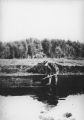 A common profession in Balúrail is that of the peat cutter.
 -
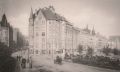 A photograph of Ivaié ca. 984
 -
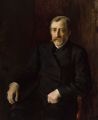 A photograph of Gorísio Estilgive, president of the League of Balúrail.


