Sanctum in Pressure: Difference between revisions
Created page with "{{Artwork Infobox |Name=Sanctum in Pressure |Image=center|frameless |Artist=Surn-Hael |Type=Triptych (Tonal Relief) |Medium=Chiseled basalt |Location=Dul-Val, South Archive Hall |Cultural Origin=Orasian }} {{Artwork Sections |Introduction=''Sanctum in Pressure'' is a monumental triptych carved directly into a living basalt wall in the South Archive Hall of Dul-Val. Rendered in tonal relief, the piece is regarded as one of the..." |
No edit summary |
||
| Line 1: | Line 1: | ||
{{ | {{Orasian Artworks Infobox | ||
|Name=Sanctum in Pressure | |Name=Sanctum in Pressure | ||
|Image=[[File:Artwork - Sanctuary Vale 02.jpg|center|frameless]] | |Image=[[File:Artwork - Sanctuary Vale 02.jpg|center|frameless]] | ||
| Line 8: | Line 8: | ||
|Cultural Origin=[[Orasian]] | |Cultural Origin=[[Orasian]] | ||
}} | }} | ||
{{ | {{Orasian Artworks Sections | ||
|Introduction=''Sanctum in Pressure'' is a monumental triptych carved directly into a living basalt wall in the South Archive Hall of Dul-Val. Rendered in tonal relief, the piece is regarded as one of the most significant visual expressions of collective memory in [[Sanctuary Vale]]. The work is both artistic and acoustic—its surfaces are shaped to resonate faintly in response to ambient sounds, in accordance with Orasian resonance practice. | |Introduction=''Sanctum in Pressure'' is a monumental triptych carved directly into a living basalt wall in the South Archive Hall of Dul-Val. Rendered in tonal relief, the piece is regarded as one of the most significant visual expressions of collective memory in [[Sanctuary Vale]]. The work is both artistic and acoustic—its surfaces are shaped to resonate faintly in response to ambient sounds, in accordance with Orasian resonance practice. | ||
|Description=The triptych is composed of three continuous panels, each reflecting a pivotal moment in the memory of the vale. No figures are present; the work relies entirely on shape, pressure lines, and the interplay of etched texture and stone silence. | |Description=The triptych is composed of three continuous panels, each reflecting a pivotal moment in the memory of the vale. No figures are present; the work relies entirely on shape, pressure lines, and the interplay of etched texture and stone silence. | ||
| Line 14: | Line 14: | ||
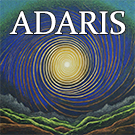
* The first panel represents the *arrival of the [[Orasians]]* into the valley. It features spiraling descent forms, overlapping path impressions, and rhythmically layered stone bands suggesting listening, movement, and anchoring. | * The first panel represents the *arrival of the [[Orasians]]* into the valley. It features spiraling descent forms, overlapping path impressions, and rhythmically layered stone bands suggesting listening, movement, and anchoring. | ||
* The second panel depicts the *sealing of the Tarsuun Pass*. It presents a central fracture locked by interlocking stone shapes and bounded by carved resonance loops, symbolizing containment and ritual boundary. | * The second panel depicts the *sealing of the [[Tarsuun Pass]]*. It presents a central fracture locked by interlocking stone shapes and bounded by carved resonance loops, symbolizing containment and ritual boundary. | ||
* The third panel conveys the *echoing silence after the [[Great Erosion]]*. Here, waveforms gradually diminish into flat, untouched basalt, evoking a sense of stillness, grief, and quiet endurance. | * The third panel conveys the *echoing silence after the [[Great Erosion]]*. Here, waveforms gradually diminish into flat, untouched basalt, evoking a sense of stillness, grief, and quiet endurance. | ||
Revision as of 20:01, 3 April 2025
| Sanctum in Pressure | |
|---|---|
| Image |  |
| Artist | Surn-Hael |
| Type | Triptych (Tonal Relief) |
| Medium | Chiseled basalt |
| Location | Dul-Val, South Archive Hall |
| Cultural Origin | Orasian |
Introduction
Sanctum in Pressure is a monumental triptych carved directly into a living basalt wall in the South Archive Hall of Dul-Val. Rendered in tonal relief, the piece is regarded as one of the most significant visual expressions of collective memory in Sanctuary Vale. The work is both artistic and acoustic—its surfaces are shaped to resonate faintly in response to ambient sounds, in accordance with Orasian resonance practice.
Description
The triptych is composed of three continuous panels, each reflecting a pivotal moment in the memory of the vale. No figures are present; the work relies entirely on shape, pressure lines, and the interplay of etched texture and stone silence.
- The first panel represents the *arrival of the Orasians* into the valley. It features spiraling descent forms, overlapping path impressions, and rhythmically layered stone bands suggesting listening, movement, and anchoring.
- The second panel depicts the *sealing of the Tarsuun Pass*. It presents a central fracture locked by interlocking stone shapes and bounded by carved resonance loops, symbolizing containment and ritual boundary.
- The third panel conveys the *echoing silence after the Great Erosion*. Here, waveforms gradually diminish into flat, untouched basalt, evoking a sense of stillness, grief, and quiet endurance.
Interpretation
The triptych is intended to be read from left to right in complete silence. Visitors are traditionally guided through the viewing space by Stonewardens during civic memory rites. Each panel includes natural mineral veining left untouched to reinforce the integration of natural memory and human shaping.
Scholars interpret the continuous flow lines beneath all three panels as representing the stone-consciousness of Sanctuary Vale—a living witness that endures beyond human events.
Cultural Role
''Sanctum in Pressure'' is central to rites of passage in Dul-Val, especially for those assuming civic roles related to oath-keeping or pass guardianship. While not touched directly, the space before the mural is often used for silent meditation or first resonance alignment.
The triptych is also featured in tonal training, as its carved surfaces are sensitive to harmonic frequency. Apprentices are taught to observe the mural while listening to its subtle tonal reflections in controlled silence.