(11 intermediate revisions by the same user not shown)
Line 3:
Line 3:
|Flora=
|Flora=
{{further|List of flora of Payalwa}}
{{further|List of flora of Payalwa}}
310 species of [[vascular plant]]s were said to be found in Greenland in 2019,{{cn|date=September 2022}} including 15 [[endemism|endemic]] species{{cn|date=June 2023}}. Although individual plants can be profuse in favourable situations, relatively few plant species tend to be represented in a given place.
In northern Greenland, the ground is covered with a carpet of mosses and low-lying shrubs such as [[Salix herbacea|dwarf willows]] and [[crowberry|crowberries]]. Flowering plants in the north include [[Stylophorum diphyllum|yellow poppy]], ''[[Pedicularis]]'', and ''[[Pyrola]]''.<ref>{{cite journal|last1=Bay|first1=Christian|title=A phytogeographical study of the vascular plants of northern Greenland - north of 74°00 northern latitude|journal=Meddelelser om Grønland|date=1992|volume=36|pages=1–102}}</ref><ref name="brit1911"/> Plant life in southern Greenland is more abundant, and certain plants, such as the [[Betula nana|dwarf birch]] and willow, may grow several feet high.
<gallery>
Image:Allia tree 01.jpg|[[Allia|Allia Tree]] <br /> A common fir tree found in the Eastern Highlands.
The only natural forest in Greenland is found in the [[Qinngua Valley]]. The forest consists mainly of downy birch (''[[Betula pubescens]]'') and grey-leaf willow (''[[Salix glauca]]''), growing up to {{convert|7|–|8|m|ft}} tall,<ref>{{cite web|url=http://www.wondermondo.com/Countries/NA/Greenland/Kujalleq/Qinngua.htm|title=Qinngua Valley|publisher=Wondermondo|date=2013-06-23|access-date=20 January 2015|archive-date=2017-10-07|archive-url=https://web.archive.org/web/20171007220312/http://www.wondermondo.com/Countries/NA/Greenland/Kujalleq/Qinngua.htm|url-status=dead}}</ref> although nine stands of conifers had been cultivated elsewhere by 2007.<ref name="times"/>
Image:Avoredo Tree.jpg|[[Avoredo|Avoredo Tree]] <br /> The most common tree in the Western Lowlands in Payalwa.
Horticulture shows a certain degree of success. Plants such as [[broccoli]], [[radish]]es, [[spinach]], [[leek]]s, [[lettuce]], [[turnip]]s, [[chervil]], [[potato]]es and [[parsley]] are grown up to considerable latitudes, while the [[Kujalleq|very south]] of the country also rears [[Astereae|asters]], ''[[Nemophila]]'', [[Reseda (plant)|mignonette]], [[rhubarb]], [[sorrel]] and [[carrot]]s.<ref name="brit1911"/> Over the decade to 2007, the growing season lengthened by as much as three weeks.<ref name="times"/>
Image:Bagava fruit 01.jpg|[[Bagava Fruit]] <br /> A fruit found on alpine slopes in the Eastern Highlands.
In the 13th-century ''[[Konungs skuggsjá]] (King's mirror)'', it is stated that the old Norsemen tried in vain to raise barley.<ref name="brit1911"/> Recent research from archaeological digs on Greenland by the National Museum in Copenhagen discovered barley grains and concluded that the Vikings were able to grow barley.<ref>{{Cite web|url=https://sciencenordic.com/agriculture-archaeology-denmark/vikings-grew-barley-in-greenland/1447746|title=Vikings grew barley in Greenland|last1=Hildebr|first1=Sybille|last2=t|date=2012-02-03|website=sciencenordic.com|language=no|access-date=2019-12-27}}</ref>
Image:Brumerva01.jpg|[[Brumerva|Brumerva Fern]] <br /> A pale marsh fern whose leaves are often used in teas and poultices.
<gallery>
Image:Payalwan Pine 01.jpg|[[Payalwan Pine]] <br /> The most common tree in the Eastern Highlands.
[[Velharrama]] - A shrub that is known for it's bright red berries. The berries release a sweet smell and eating them is known to allow the eater to experience a vivid a story. Storytellers thus use the berries to generate new ideas or remember old tales.
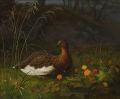
Image:Passach Painting.jpg|[[Passach|Passachs]] <br /> Grouse bird that lives in Alpine woods.
[[Brumerva]] - A pale marsh fern whose leaves are often used in teas and poultices.
Image:Preguio Drawing.jpg|[[Preguio|Preguios]] <br /> Large mammal that's territorial but an herbivore.
[[Velhudo]] - A mash fungus tied to folktales about silent monks wandering the swampy landscape.
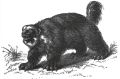
Image:Sibela Drawing.jpg|[[Sibela|Sibelas]] <br /> Small mammalian carnivore.
[[Avoredo]] - The most common tree in the Western Lowlands in Payalwa.
Image:Xipho 01.jpg|[[Xipho|Xiphos]] <br /> Deer like mammal that lives throughout Payalwa.
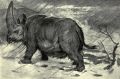
|Fauna=[[File:Panten_Etching.jpg|thumb|Etching of a Panten head]]
[[Panten|Pantens]] - Large mammals creates with wide hooves that can easily cross marshy peat.
Image:Zapuso Drawing.jpg|[[Zapuso|Zapusos]] <br /> Small common rodents.
[[Jaca|Jacas]] - Reptilian swamp dwellers.
</gallery>
[[Xipho|Xiphos]] - Deer like mammal that lives throughout Payalwa.
[[Hesper|Hesperon]] - Water birder native to the swamps of Payalwa.
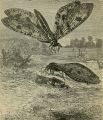
[[Myriopa|Myriopas]] - Huge winged insects.
}}
}}
[[category:Payalwa]]
[[category:Payalwa]]
Latest revision as of 15:04, 6 May 2026
Introduction
Payalwa’s landscape supports a distinctive range of flora and fauna adapted to its temperate marshy lowland conditions. This page lists some of the more unique creatures and plants native to Payalwa.

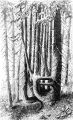 Allia Tree
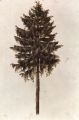 Avoredo Tree
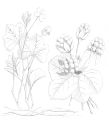 Bagava Fruit
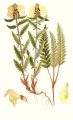 Brumerva Fern
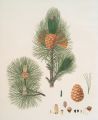 Payalwan Pine
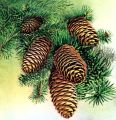 Payalwan Spruce
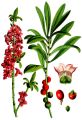 Velharrama Bush
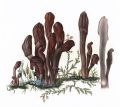 Velhudo Fungus


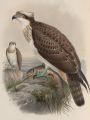 Falixes
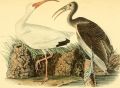 Hesperon
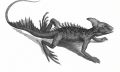 Jacas
Jacas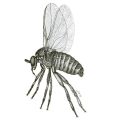 Moscanos
 Myriopas
 Pantens
 Pallas
 Passachs
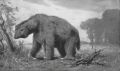 Preguios
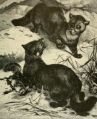 Sibelas
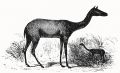 Xiphos
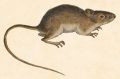 Zapusos


