Adaris: Difference between revisions
No edit summary |
m Text replacement - "the Primordial Void" to "Napadéh" |
||
| (18 intermediate revisions by the same user not shown) | |||
| Line 1: | Line 1: | ||
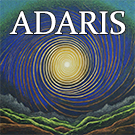
[[File:Adaris | [[File:Adaris Realms.jpg|thumb|The universe in which all exist]] | ||
'''Adaris''' is the | '''Adaris''' is the name given to the entire cosmos, a universe that emerged from the [[Primordial Void]] and was shaped by consciousness, imagination, and elemental forces. It contains a wide variety of planes and realms, both physical and metaphysical. | ||
== Introduction== | == Introduction == | ||
In | In the earliest period of Adaris, raw and chaotic energy known as [[Ákyar]] swirled throughout the infinite Primordial Void. From this formless potential arose the first spark of self-awareness, [[Umalyu]], whose dreams of possibility took shape through [[Pavkanai]], the spirit of imagination. The interaction between the two gave rise to the seven Primordial Elements of light, darkness, earth, fire, air, water, and time, which together form the foundation of all creation. | ||
Consciousness and belief play an active role in shaping existence within Adaris. Both spirits and mortal cultures contribute to the formation of reality, and new realms and concepts continue to emerge over time. | |||
== Origin and | == Origin and mythic foundations == | ||
{{main|Cosmology of Adaris}} | |||
Adaris | The cosmology of Adaris begins with Napadéh, an infinite expanse of Ákyar described as raw potential without form. Within this void, Umalyu and Pavkanai, the first consciousness and the first imagination, shaped Ákyar into reality through their interplay, often characterized in myth as a dance. Their interaction produced the [[Primordial Element|Primordial Elements]], embodied by primordial spirits that serve as the foundational aspects of matter and remain interwoven through thought and dream. The interactions of the primordial spirits in turn gave rise to the [[Ascendant Spirit|Ascendant Spirits]], who brought new concepts, realms, and possibilities into being. | ||
The last of the Primordial Elements to emerge was time, embodied by the primordial spirit [[Konmai]]. Its arrival stabilized creation into a linear progression and prevented Adaris from reverting to its original chaotic state. | |||
== Planes and | == Planes and dimensional interplay == | ||
Adaris | Adaris extends well beyond its tangible continents and seas. Its material planes are physical worlds inhabited by mortal races and kingdoms, while its spiritual and conceptual realms are formed by belief, dreams, or fundamental concepts such as time, birth, and death, and are inhabited primarily by spirits. | ||
== Influence on | == Influence on culture and belief == | ||
Because reality in Adaris is shaped by consciousness and imagination | Because reality in Adaris is shaped by consciousness and imagination, belief has tangible consequences for its inhabitants. Many cultures maintain creation myths involving Umalyu, Pavkanai, and the Primordial Spirits, whom they regard either as deities or as cosmic principles. Practitioners of [[osia]], known as [[Osiari|osiari]], align themselves with spirits through [[attunement]], allowing them to manipulate spirits and, by extension, reality itself. Rituals and festivals, including ceremonies devoted to light and darkness, rites of fire and water, and celebrations of wind and sky, reflect a widespread reverence for the primordial spirits. | ||
The spiritual hierarchy, from nascent spirits to | The spiritual hierarchy, which ranges from nascent spirits to the primordial beings, forms a central part of the cultural fabric of Adaris. Rulers frequently consult osiari in recognition that the harnessing of cosmic forces may bring either prosperity or calamity. | ||
== | == Beyond mortality == | ||
Adaris contains numerous layers of existence governed by divine powers, ancestral spirits, or abstract concepts. Spirits frequently intervene in mortal affairs, whether to gain the worship and belief that strengthen them or to guide cultures toward cosmic balance. The presence or absence of worshippers can alter or stabilize a spirit's power, illustrating the close relationship between faith and reality in Adaris. | |||
[[Category:Adaris]] | |||
: | |||
Latest revision as of 14:17, 1 October 2026

Adaris is the name given to the entire cosmos, a universe that emerged from the Primordial Void and was shaped by consciousness, imagination, and elemental forces. It contains a wide variety of planes and realms, both physical and metaphysical.
Introduction
In the earliest period of Adaris, raw and chaotic energy known as Ákyar swirled throughout the infinite Primordial Void. From this formless potential arose the first spark of self-awareness, Umalyu, whose dreams of possibility took shape through Pavkanai, the spirit of imagination. The interaction between the two gave rise to the seven Primordial Elements of light, darkness, earth, fire, air, water, and time, which together form the foundation of all creation.
Consciousness and belief play an active role in shaping existence within Adaris. Both spirits and mortal cultures contribute to the formation of reality, and new realms and concepts continue to emerge over time.
Origin and mythic foundations
The cosmology of Adaris begins with Napadéh, an infinite expanse of Ákyar described as raw potential without form. Within this void, Umalyu and Pavkanai, the first consciousness and the first imagination, shaped Ákyar into reality through their interplay, often characterized in myth as a dance. Their interaction produced the Primordial Elements, embodied by primordial spirits that serve as the foundational aspects of matter and remain interwoven through thought and dream. The interactions of the primordial spirits in turn gave rise to the Ascendant Spirits, who brought new concepts, realms, and possibilities into being.
The last of the Primordial Elements to emerge was time, embodied by the primordial spirit Konmai. Its arrival stabilized creation into a linear progression and prevented Adaris from reverting to its original chaotic state.
Planes and dimensional interplay
Adaris extends well beyond its tangible continents and seas. Its material planes are physical worlds inhabited by mortal races and kingdoms, while its spiritual and conceptual realms are formed by belief, dreams, or fundamental concepts such as time, birth, and death, and are inhabited primarily by spirits.
Influence on culture and belief
Because reality in Adaris is shaped by consciousness and imagination, belief has tangible consequences for its inhabitants. Many cultures maintain creation myths involving Umalyu, Pavkanai, and the Primordial Spirits, whom they regard either as deities or as cosmic principles. Practitioners of osia, known as osiari, align themselves with spirits through attunement, allowing them to manipulate spirits and, by extension, reality itself. Rituals and festivals, including ceremonies devoted to light and darkness, rites of fire and water, and celebrations of wind and sky, reflect a widespread reverence for the primordial spirits.
The spiritual hierarchy, which ranges from nascent spirits to the primordial beings, forms a central part of the cultural fabric of Adaris. Rulers frequently consult osiari in recognition that the harnessing of cosmic forces may bring either prosperity or calamity.
Beyond mortality
Adaris contains numerous layers of existence governed by divine powers, ancestral spirits, or abstract concepts. Spirits frequently intervene in mortal affairs, whether to gain the worship and belief that strengthen them or to guide cultures toward cosmic balance. The presence or absence of worshippers can alter or stabilize a spirit's power, illustrating the close relationship between faith and reality in Adaris.